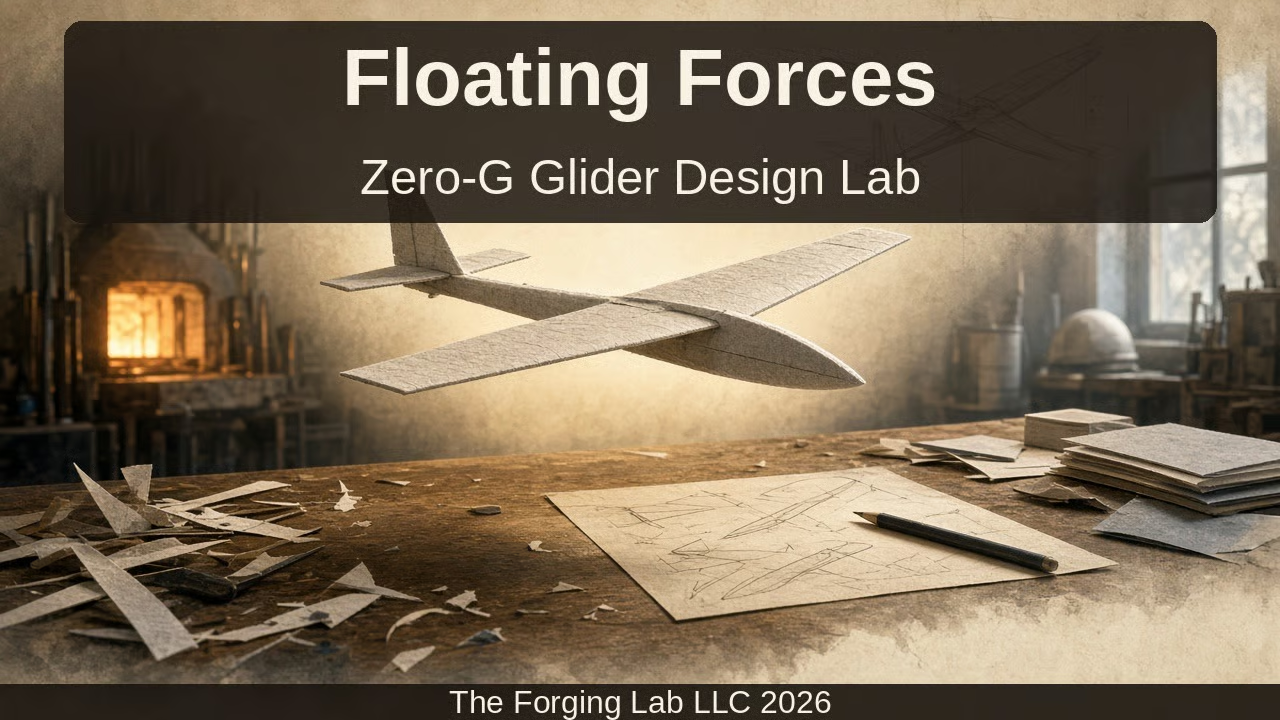
Floating Forces: Zero-G Gliders FREE LESSON
An experiential STEM aerospace challenge where students design, iterate, and balance custom gliders to analyze aerodynamics, microgravity mechanics, and center-of-mass principles.
- • Complete student design packet
- • Teacher guide & rubrics
- • Printable logs & sheets
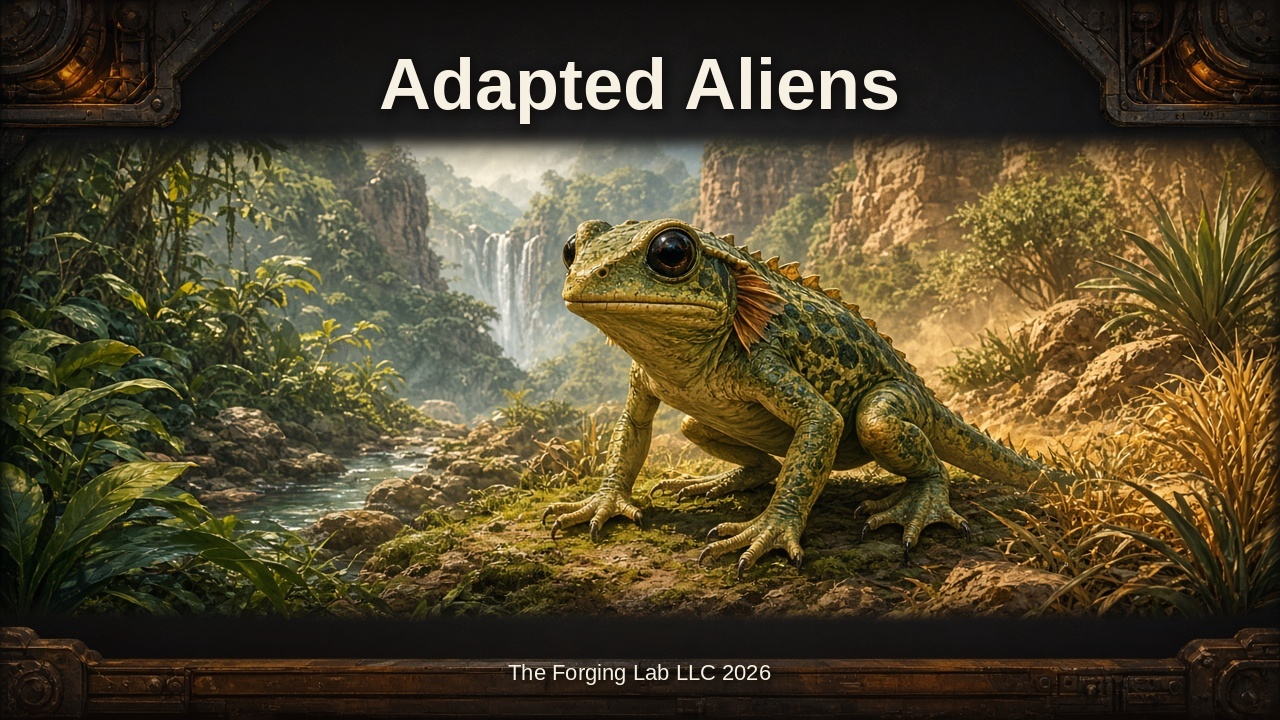
Adaptive Aliens FREE LESSON
Students randomly draw adaptation cards, design an original alien life form, and scientifically defend which Earth-like habitat fits best. Includes optional AI Creature Studio extension.
- • Teacher 5E guide + AI coach
- • Student adaptation tables
- • Print-ready Design Cards PDF
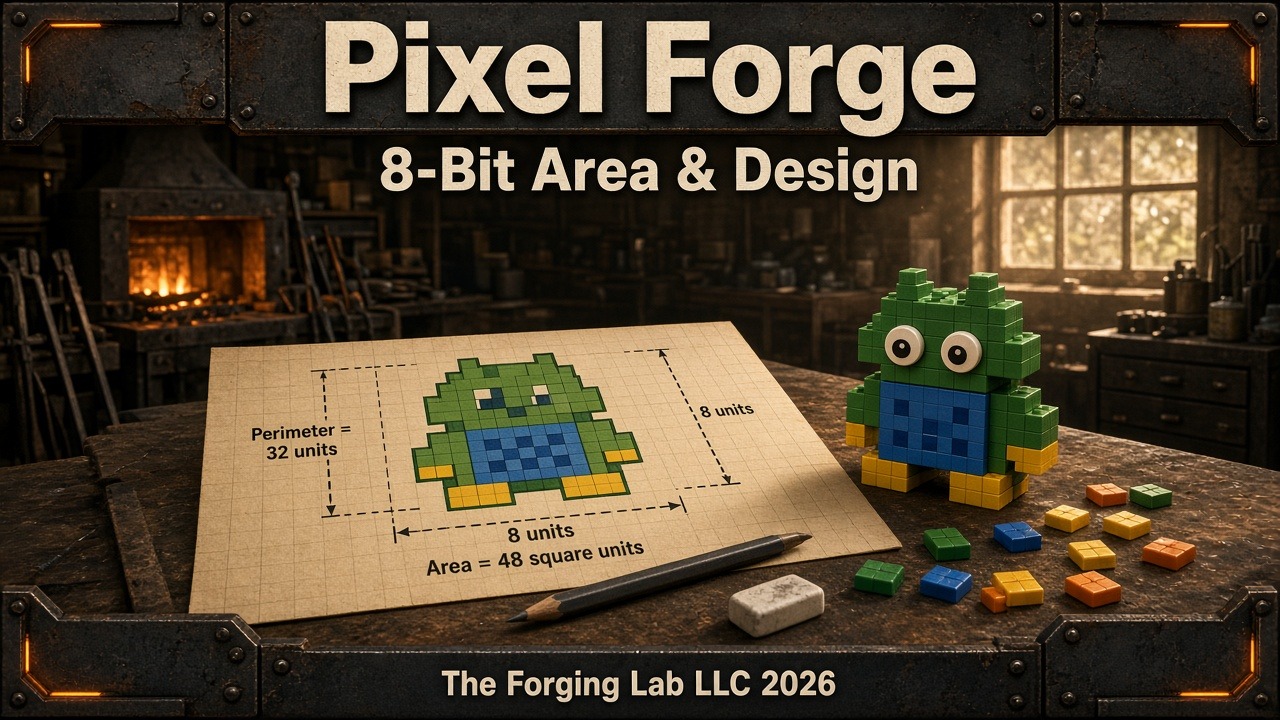
Pixel (8-bit) Forge Lesson FREE LESSON
Area, perimeter, and fractions taught through original 8-bit pixel design. Students draw on a grid first, then build using paper, LEGO, cubes, or sticky-note murals.
- • 3-day flow & 5 build modes
- • Area/perimeter/ratio tallies
- • A3 blank grid sheet templates
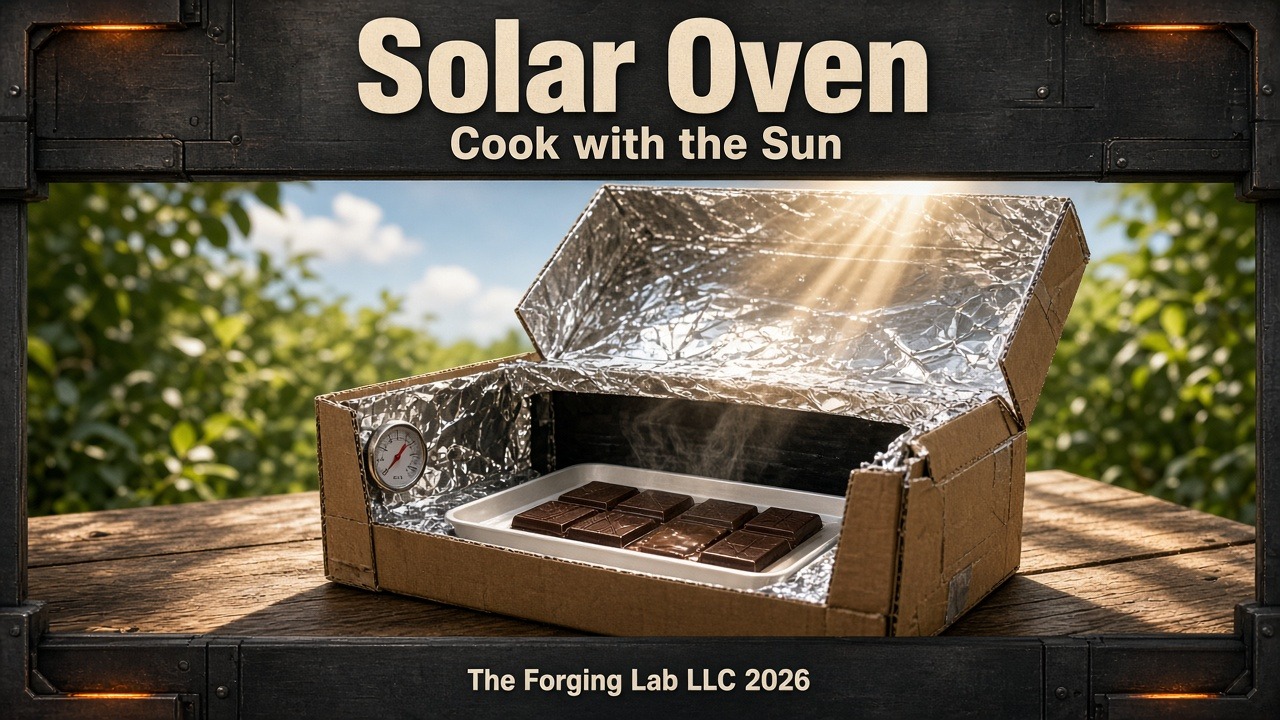
Solar Oven Challenge FREE LESSON
Teams design, construct, and test a recycled cardboard solar oven. Measure temperature curves, test solar radiation trapping, and complete a redesign cycle.
- • Teacher safety & energy notes
- • Student design sketch & logs
- • Temp table & graphing handout
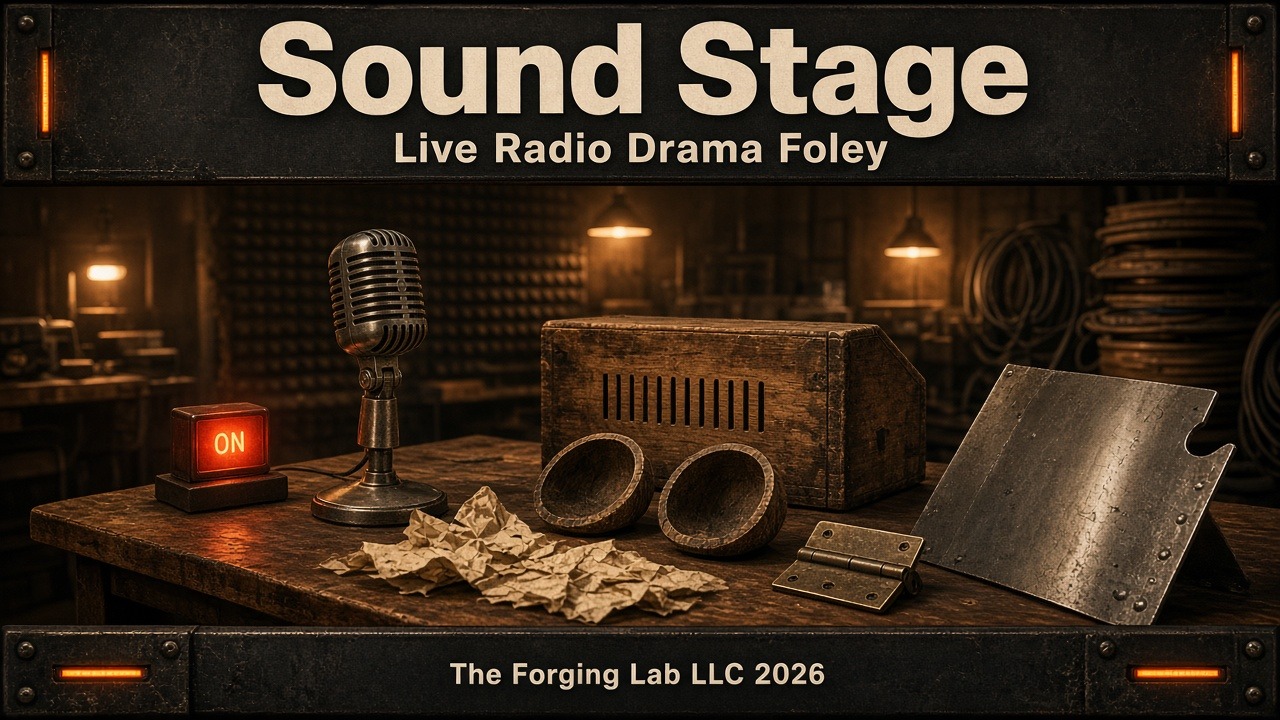
Sound Stage Radio FREE LESSON
Students build physical Foley sound boxes, record a labeled effects library, and perform live in an original radio drama or podcast broadcast.
- • Production flow & demo credits
- • Student cue sheets & build plan
- • 47 sample cue reference PDF
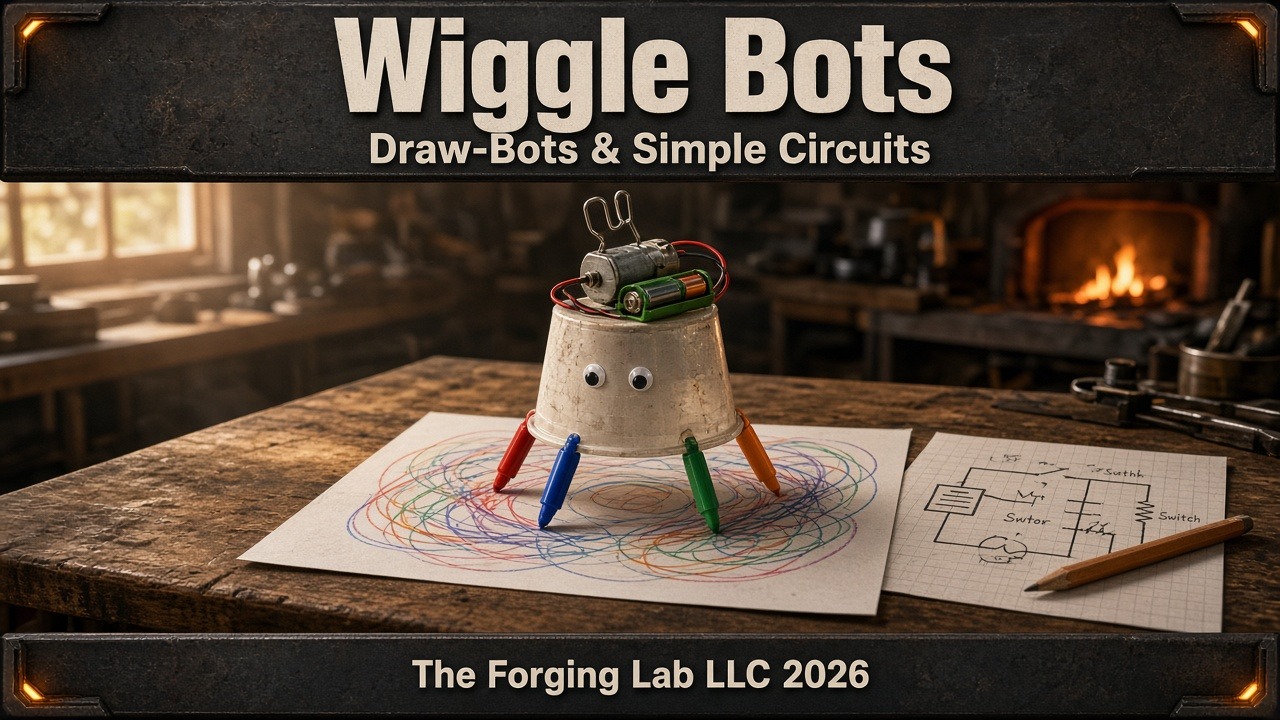
Wiggle Bots FREE LESSON
Teams construct motorized art bots using recycled containers and simple DC circuits. Explore off-balance mass, vibration forces, and collaborative group art.
- • Circuit primer & safety guide
- • Student circuit build checklist
- • Visual battery/motor schematics
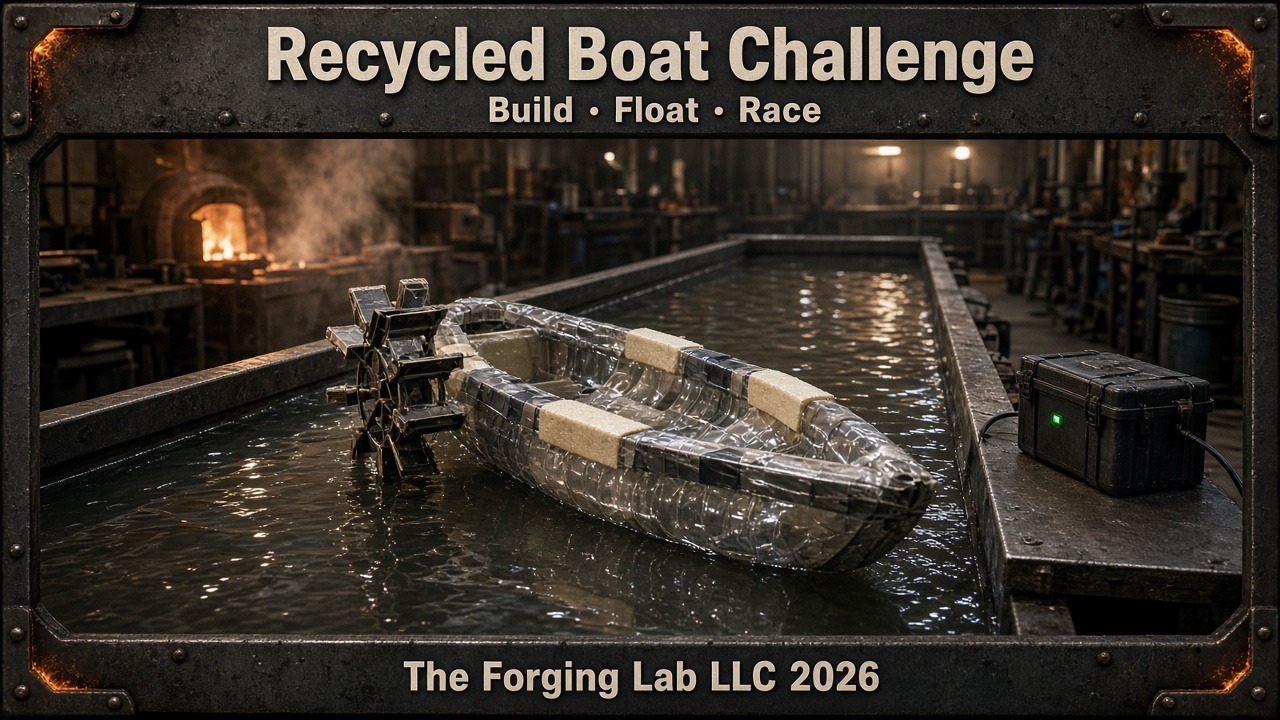
Recycled Boat Challenge FREE LESSON
Design, build, and race self-propelled watercraft using recycled materials, buoyancy calculations, rubber-band paddles, or waterproofed motors.
- • Buoyancy & waterproofing notes
- • Student role & race log tables
- • Redesign trials handout
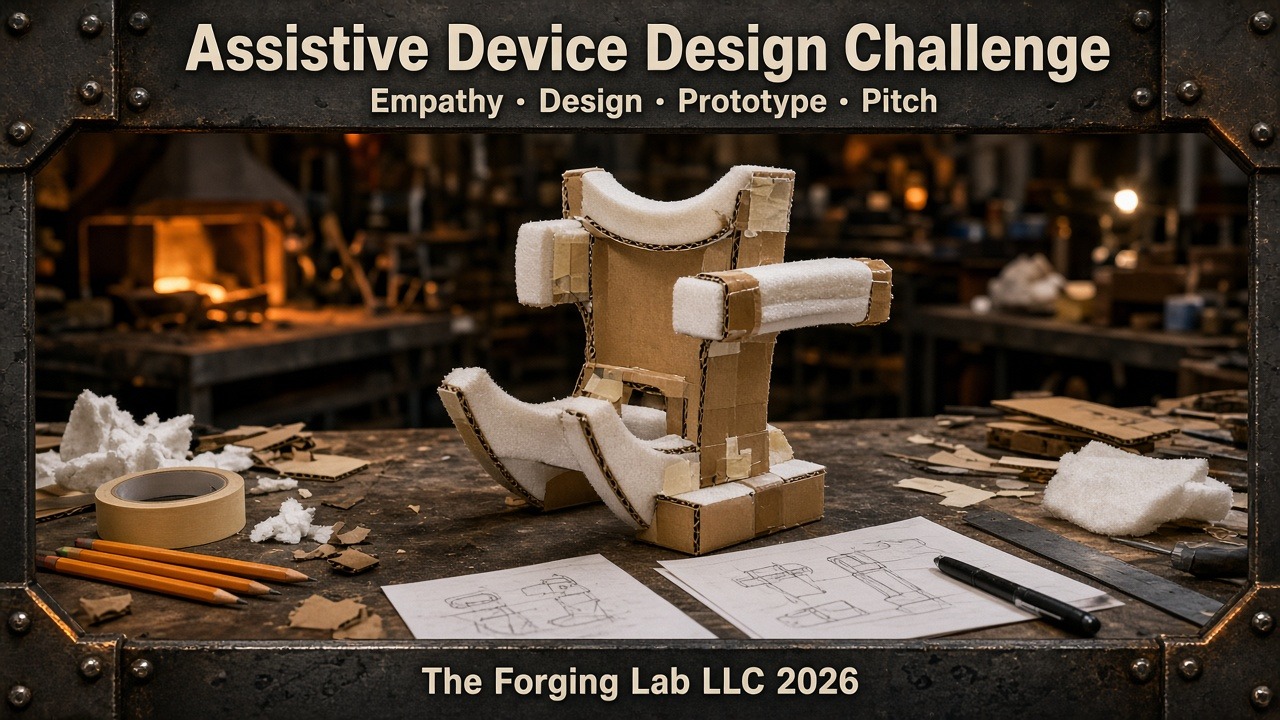
Assistive Device Challenge FREE LESSON
**FREE educator digital pack** · Grades 7–9 (middle / early high school makerspace) · ~4 class sessions (5 max)
Teams of 3–4 design an assistive device for a real physical need — improve an existing product or invent a new everyday helper. Plan and reflect before build. Prototype a model, then pitch it in a short commercial (video or live play). Core skill beyond the build: empathy with person-first, dignity language.
- • Problem identification & user persona briefs
- • Rapid prototyping materials guide
- • Commercial pitch rubric & evaluation logs
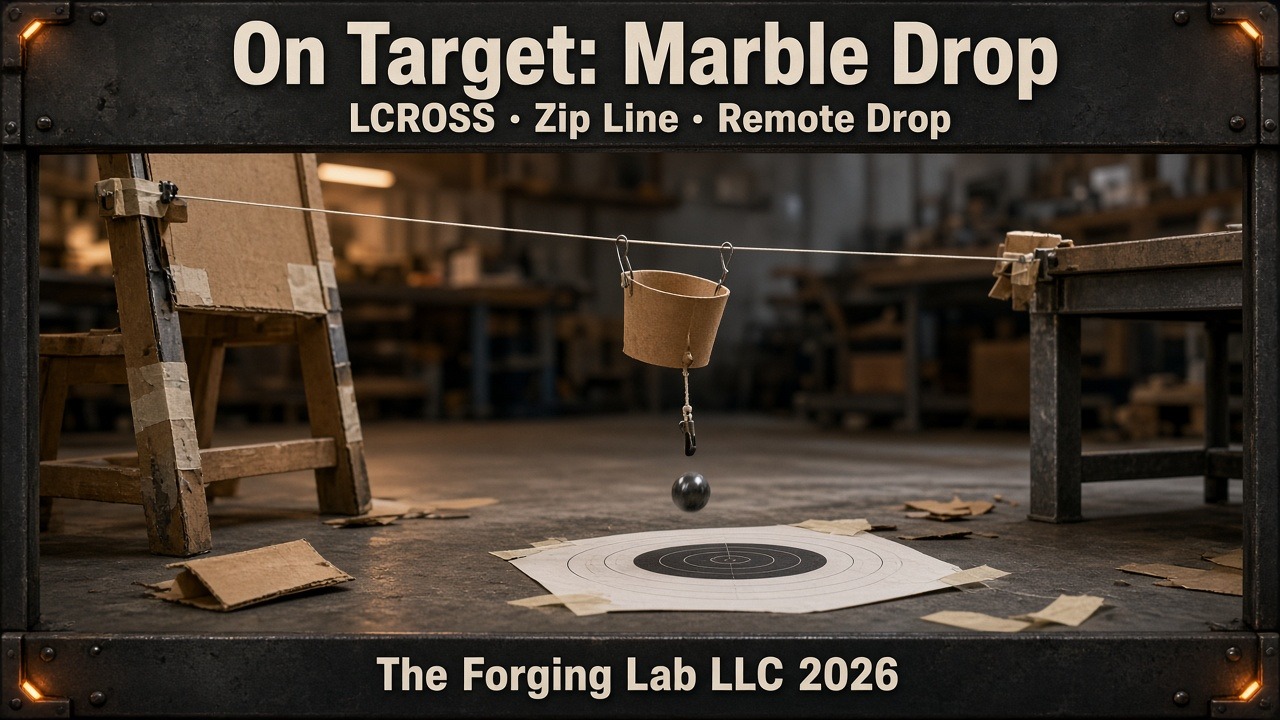
On-Target-Marble-Drop FREE LESSON
**FREE educator digital pack** · Grades 6–9 · ~3 class sessions (4 max) The Forging Lab LLC 2026 · teaching.theforginglab.com Teams design a paper-cup marble carrier that rides a classroom zip line and drops a marble onto a floor target with a remote string tip — no hand-drop at the target. Hooked to NASA’s LCROSS moon-impact analogy: accuracy, timing, and redesign under real miss-distance data.
- • Zipline carrier blueprint & trigger mechanics
- • LCROSS mission context & backgrounder
- • Target measurement sheets & accuracy tables
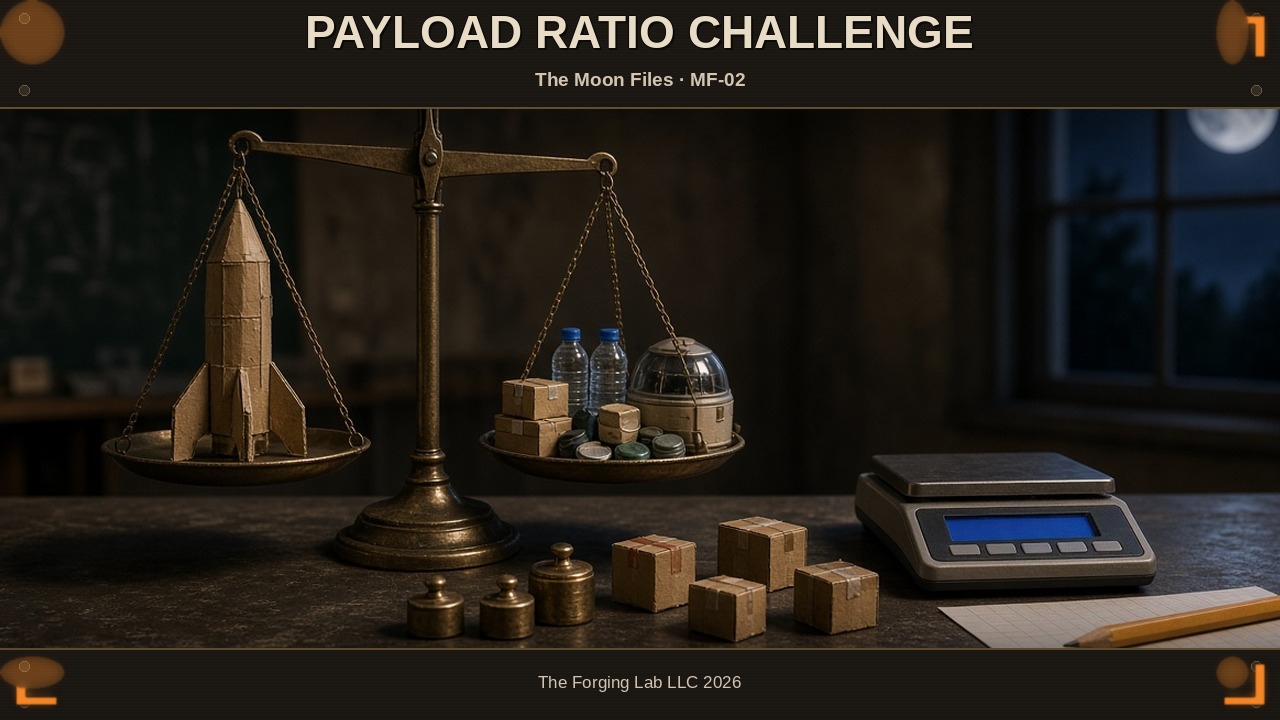
Payload, Ratio Challenge- FREE LESSON 10
**FREE** · Grades 6-8 (with a Grades 4-5 adaptation) · 1 class period Every gram on a Moon rocket costs fuel, so mission planners pack to a strict limit. In this challenge, teams pack a crewed Moon trip using counters as units of mass: space suited crew, meals, tool kits and medical kits, all in fixed ratios. The catch: the maximum payload is a secret, sealed in a cup. Teams get three trial weigh-ins on a balance that only says heavier or lighter, then commit to a final pack before the big reveal. Students calculate their payload ratio and compare it with a real rocket, which sends only about 1% of its launch-pad mass to the Moon. The pack includes a data table and a full answer key.
- • Challenge Teacher Brief
- • Student Brief
- • Material list and answer keys
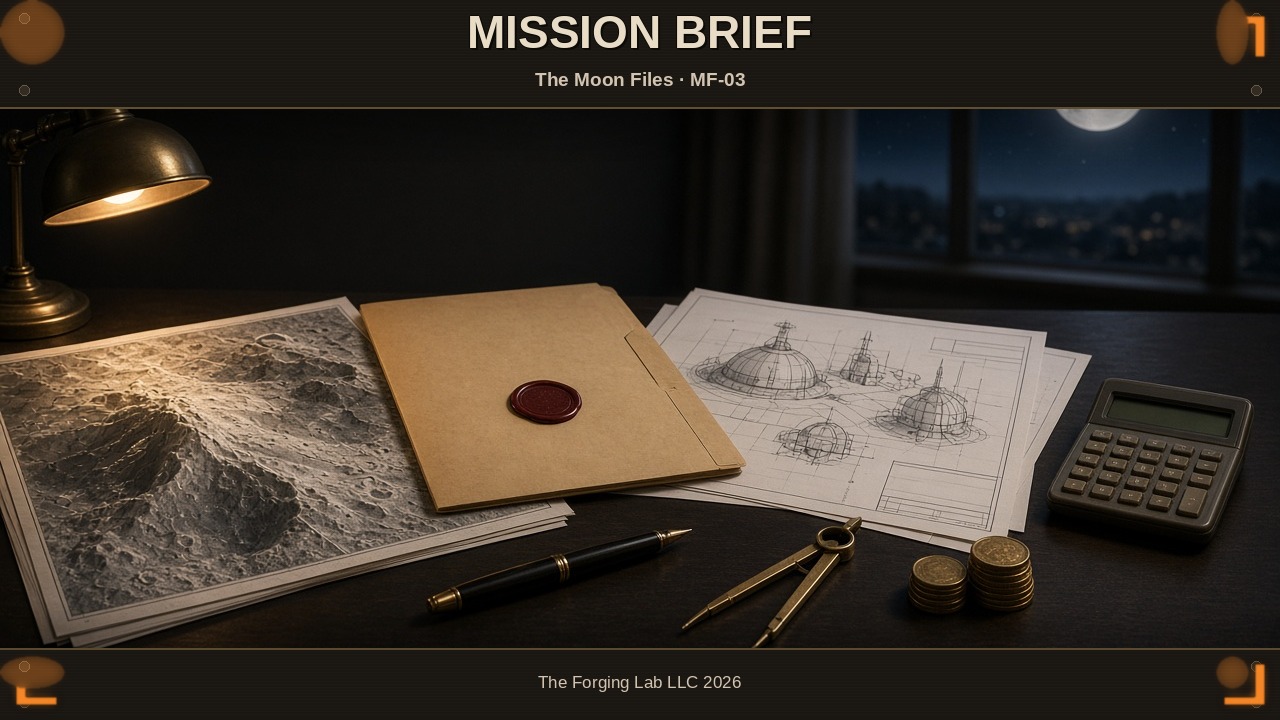
Mission Brief- FREE LESSONS
**FREE** · Grades 6-8 (with a Grades 4-5 adaptation) · 1-2 class periods A sealed request for proposals lands on the desk: plan a crewed mission that sets up a starter base near the Moon's South Pole, for $14 billion or less. Students become engineering interns at a made-up aerospace company, read the RFP, choose a mission name and goals, and draft a first budget using the Moon Files series price list: launches, lander, science instruments, rover, base modules and operations. Every choice has a cost, so teams have to make real trade-offs and keep a reserve for surprises. The pack includes a proposal checklist and a reusable one-page Budget Ledger that later lessons build on.
- • Teacher Challenge Brief
- • Student Pages; safety checklist
- • Budget Ledger
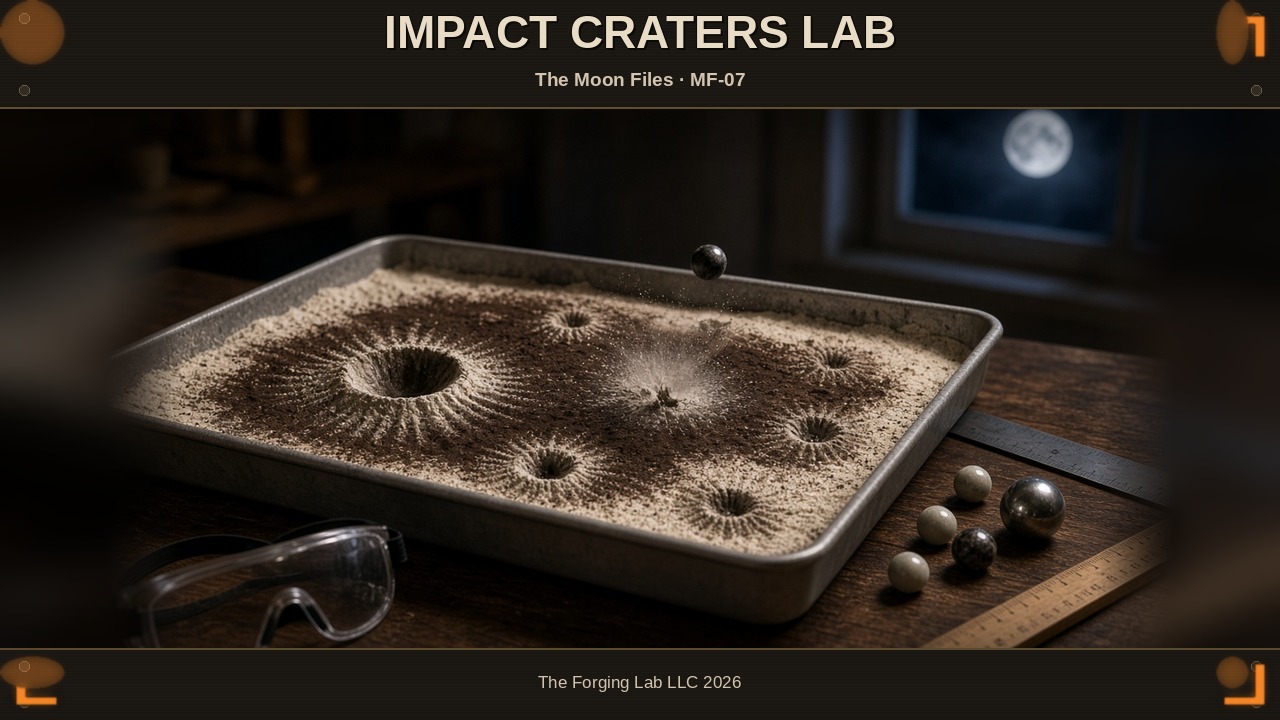
Impact Craters- FREE LESSON
**FREE** · Grades 6-8 (with a Grades 4-5 adaptation) · 1-2 class periods Why is the Moon covered in craters while Earth hides most of its own? In this hands-on lab, student teams drop marbles and steel balls into a layered tray of flour and cocoa, then measure each crater's diameter, depth and longest ray. They change one variable at a time (drop height, then impactor mass), record three trials per setting, graph crater size against height and mass, and explain with evidence how impact energy shapes a surface. Includes a Teacher Page with timed flow, goggles and dust safety notes, and a Student Pack with data tables and graph grids.
- • Teacher Challenge Brief
- • Student Pages; safety checklist
- • Supply List
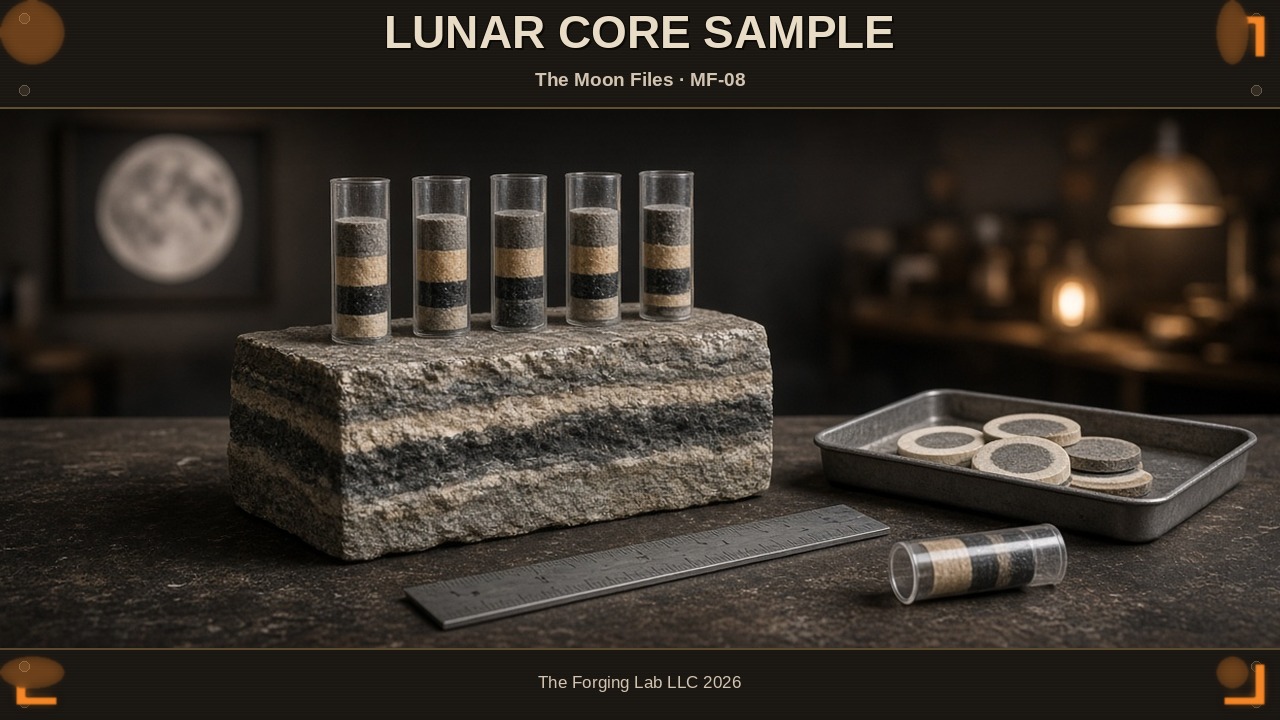
Lunar Core Samples- FREE LESSON
**FREE** · Grades 6-8 (with a Grades 4-5 adaptation) · 1 class period (optional 2nd) What's hiding under the Moon's surface? Students act as lunar geologists, pushing clear straws into a hidden layered "rock" to pull up core samples, just as Apollo astronauts did with drive tubes and drills. They sketch each core to scale, measure layer thickness, work out which layer formed first, compare a second core from another site, then cut the sample open to test their inferences. Choose the allergy-safe modeling-clay version or a nut-free edible option; a full food-allergy safety note is included. Pairs well with MF-09.
- • Teacher Challenge Brief
- • Student Pages; safety checklist
- • Supply List
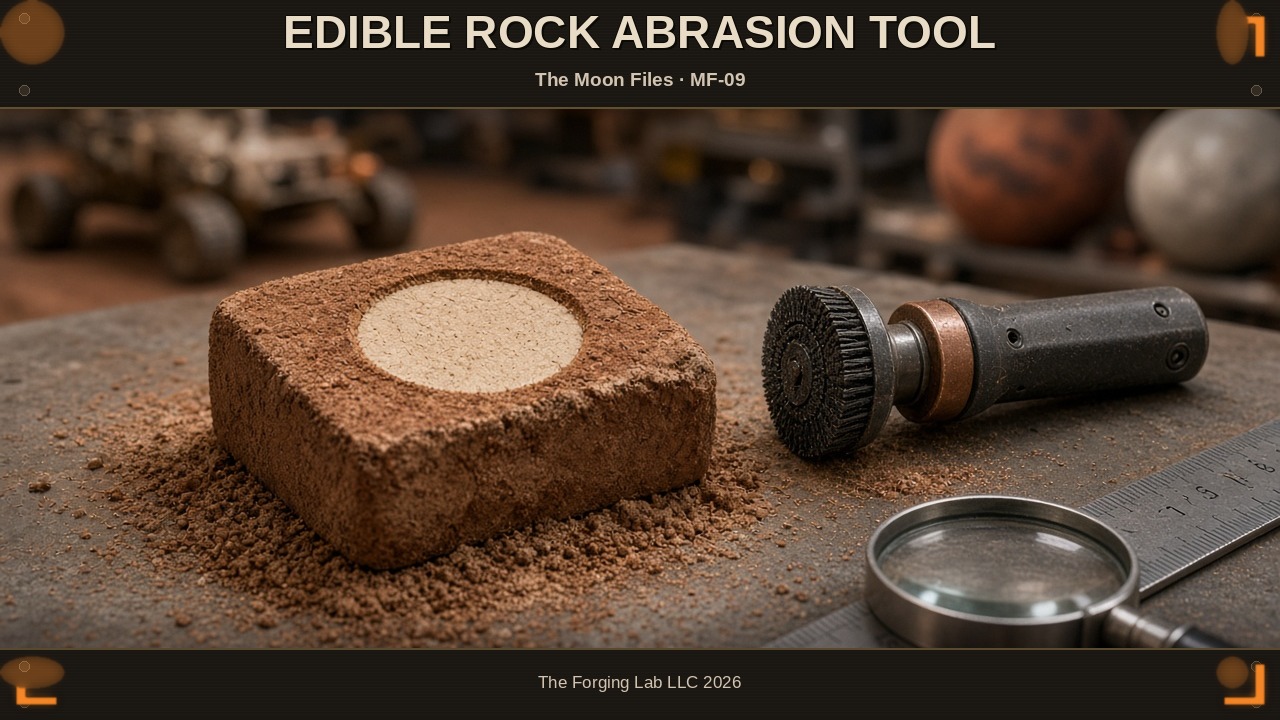
Edible Rock and Abrasion- FREE LESSON
**FREE** · Grades 6-8 (with a Grades 4-5 adaptation) · 1 class period (optional 2nd) Rocks on the Moon and Mars are dusty and weathered, so how can a robot see what they're really made of? Students model the Rock Abrasion Tool carried by the Mars rovers Spirit and Opportunity: they "grind" a cinnamon-sugar-coated fig bar with a pretzel rod, observe and measure the weathered surface, compare it with the fresh rock inside, measure their RAT hole and decide what kind of rock it could be. There is an allergy-safe clay or soap version, plus a powdered-sugar alternative for students sensitive to cinnamon. Pairs well with Lunar Core Samples.
- • Teacher Challenge Brief
- • Student Pages; safety checklist
- • Supply List
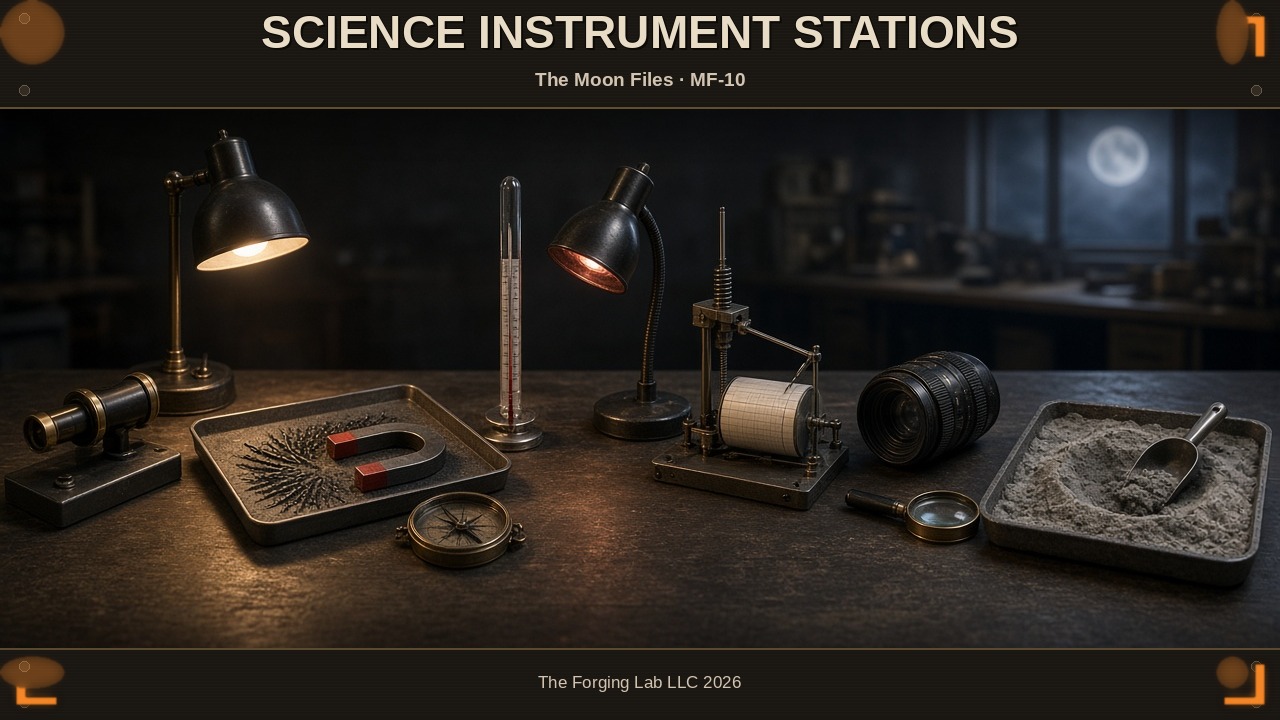
Science Instruments- FREE LESSON
**FREE** · Grades 6-8 (with a Grades 4-5 adaptation) · 1-2 class periods How do we "touch" the Moon from 384,000 km away? With instruments. Teams rotate through six hands-on stations, each modelling a real lunar instrument: cameras and telescopes, laser retroreflectors (with a flashlight and mirror), dust collectors, seismometers, magnetometers and electrical sensors. At each station they read a card, do a short task, record what they find and answer one question. Then comes the hard part: the lander can carry only three instruments, so each team picks its payload and defends the choice. The pack includes printable station cards, a student recording sheet and a teacher setup guide with materials, layout and rotation timing. No food is used.
- • Teacher Challenge Brief
- • Student Pages; safety checklist
- • Science Instrument Cards List
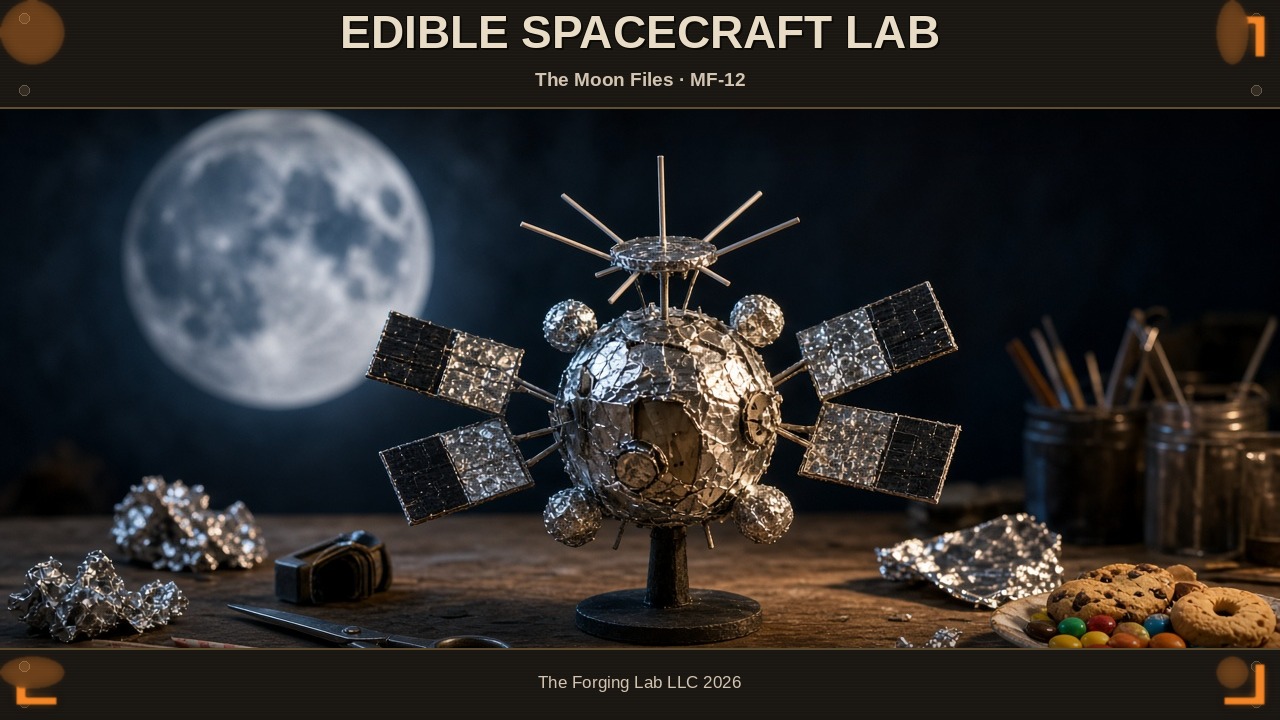
Edible Spacecraft- FREE LESSON
**FREE** · Grades 6-8 (with a Grades 4-5 adaptation) · 1-2 class periods Five teams, five real Moon missions, from Pioneer 3 in 1958 (which missed the Moon) to the Lunar Reconnaissance Orbiter, still mapping the Moon today. Each team gets a build sheet with checked mission facts (launch year, agency, goal, key instruments and what happened), then builds a labelled model of its spacecraft: Pioneer 3, the Apollo Lunar Roving Vehicle, Clementine, Lunar Prospector or LRO. The default build uses recyclables, foil, straws and cardboard. An edible version is an option, with a clear food-allergy note. Teams present with a shared rubric and line their models up as a timeline of lunar exploration.
- • Teacher Challenge Brief
- • Student Pages; safety checklist
- • Building Sheets
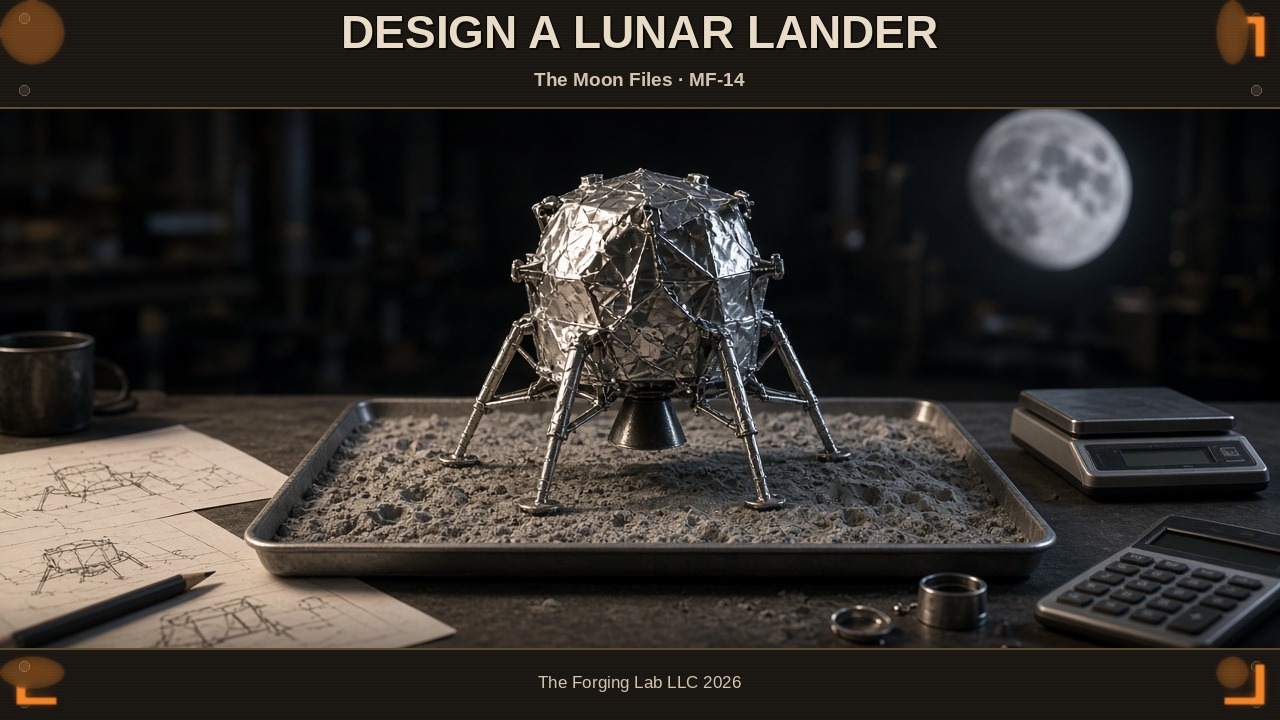
Design a Lunar Lander- FREE LESSON
**FREE** · Grades 6-8 (with a Grades 4-5 adaptation) · 1-2 class periods Every kilogram counts when you land on the Moon. Teams of engineers choose a crew cabin, fuel tanks, landing legs and engines from a component table, then add up dry mass, propellant and cost on a budget worksheet. Their lander must pass five design rules: the mass limit, the budget, enough propellant, an engine strong enough to land it, and a mission of at least 3 astronauts for 7 days. Only 15 of 256 combinations pass, so teams have to reason through trade-offs, redesign and defend their choices. The pack includes a teacher answer key with worked examples and every passing design.
- • Teacher Challenge Brief
- • Student Pages; safety checklist
- • Answer Key
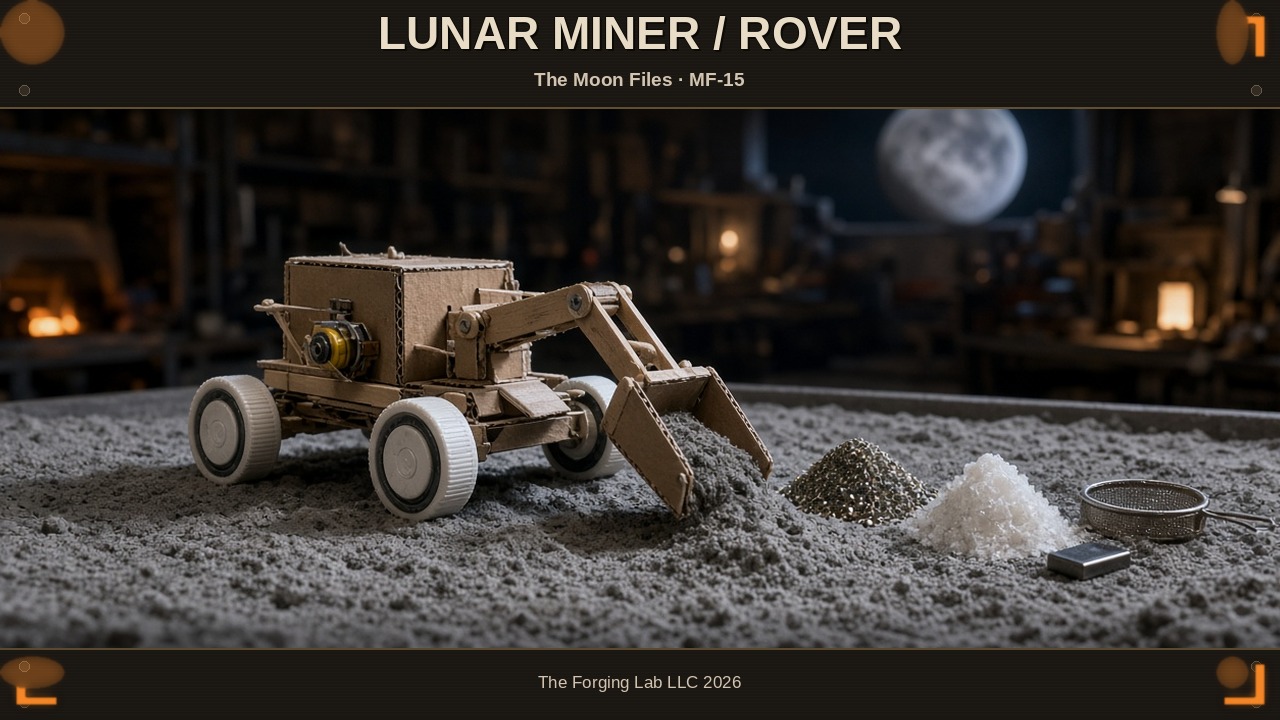
Lunar Miner Rover- FREE LESSON
**FREE** · Grades 6-8 (with a Grades 4-5 adaptation) · 2-3 class periods About 45% of Moon rock is oxygen, but it is locked inside minerals. Water ice hides in craters that never see sunlight, and the soil holds iron, titanium and aluminum. Students read a short, fact-checked background on lunar regolith resources, then work in engineering teams to design and build a model miner from classroom supplies like cardboard, bottle caps, straws and magnets. On test day each miner must cross a "lunar" course, collect three pieces of ore, sort them from waste rock and deliver them, with no hands allowed. The pack includes a design sheet, materials list, test/demo rubric and a test-day scoring sheet.
- • Teacher Challenge Brief
- • Student Pages; safety checklist
- • Rover Test
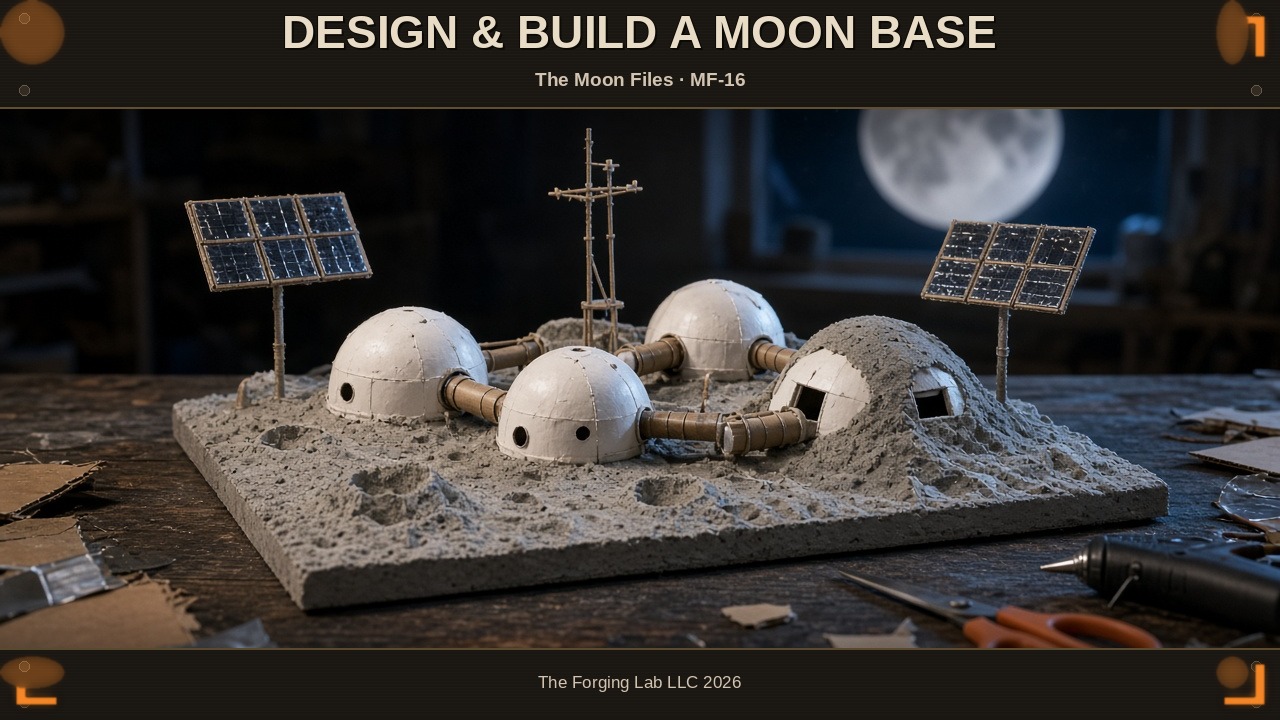
Design a Moon Base- FREE LESSON
**FREE** · Grades 6-8 (with a Grades 4-5 adaptation) · 2 class periods, or a 4-period extended version Where would you build the first Moon base, and how would you keep four astronauts alive there? In this flagship Moon Files lesson, teams read a one-page South Pole site briefing of NASA-checked facts: sunlit crater rims, icy shadowed craters, deep cold and sharp dust. They tick off eight life-support needs, choose base modules on the same price list they used in the mission budget, and plan their layout to scale on a planning grid. Then they build a model from clean recyclables and show it off in a gallery walk. The pack includes a build-day guide, materials list, planning grid and a presentation rubric with feedback slips.
- • Teacher Challenge Brief
- • Student Pages; safety checklist
- • Design Planning Grid
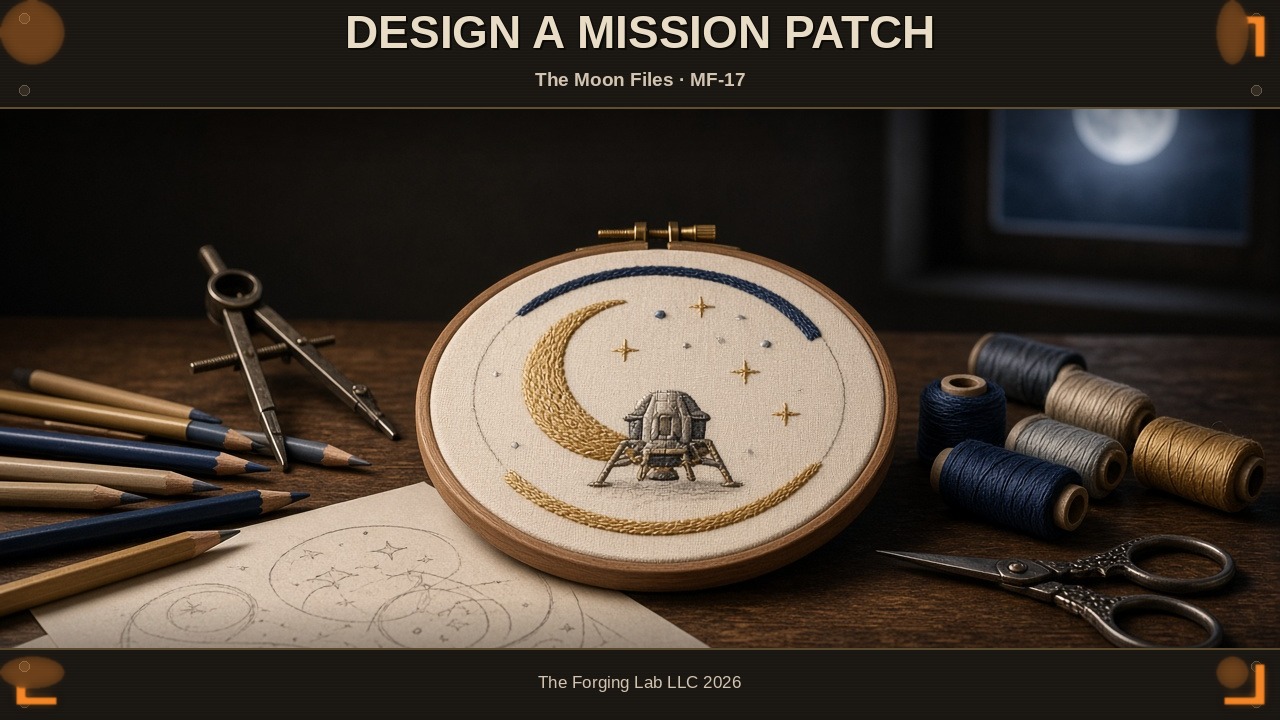
Mission Patch Design-FREE LESSON
**FREE** · Grades 6-8 (with a Grades 4-5 adaptation) · 1-2 class periods Why does the Apollo 11 patch show an eagle carrying an olive branch, and why did its crew leave their own names off? Students explore how real Apollo and Artemis patches tell a mission's story through symbols, colors and words, viewing the official images on NASA's own pages. Then they plan the symbols for their own Moon Files mission, sketch ideas alone, and merge the best ones into an original team patch. Every shape and color has to mean something. The pack includes a symbolism planning sheet, thumbnail sketch circles, a quick scoring guide and a large patch template with border and lettering bands.
- • Teacher Challenge Brief
- • Student Pages; safety checklist
- • Mission Patch Design Template
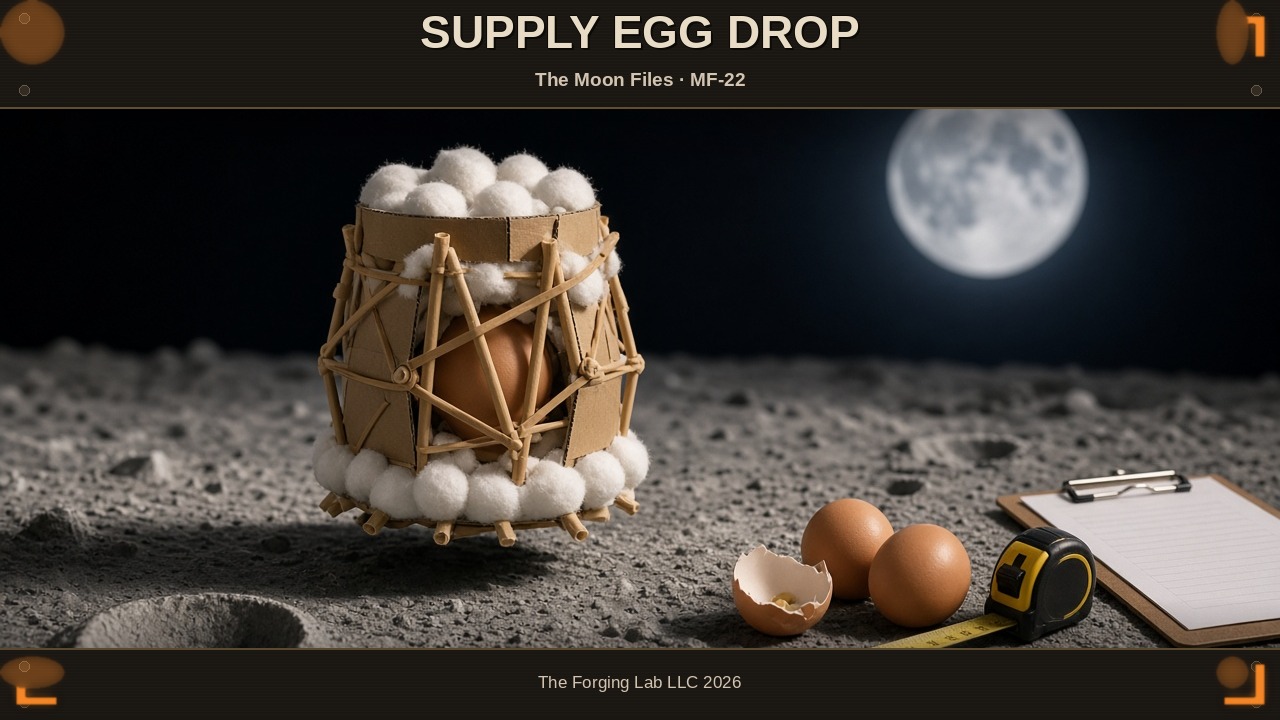
Lunar Base Egg Drop Challenge- FREE LESSON
**FREE** · Grades 6-8 (with a Grades 4-5 adaptation) · 2 class periods A Moon base will need regular supply drops, but with no air on the Moon, a parachute has nothing to push against. Engineering teams design a package no bigger than a 20 cm cube that keeps a raw egg "supply payload" safe in a drop. They buy cushions, crumple zones and airbag-style balloons from a fixed materials budget. After the first drop, teams study what failed, redesign and drop again. The pack includes a clear "would it work in a vacuum?" rule, a materials budget, a drop-test log, a redesign reflection, a drop-day safety checklist, and water-balloon or raw-potato options for egg-allergy-safe classrooms.
- • Teacher Challenge Brief
- • Student Pages; safety checklist
- • Lunar Egg Drop Data Sheet
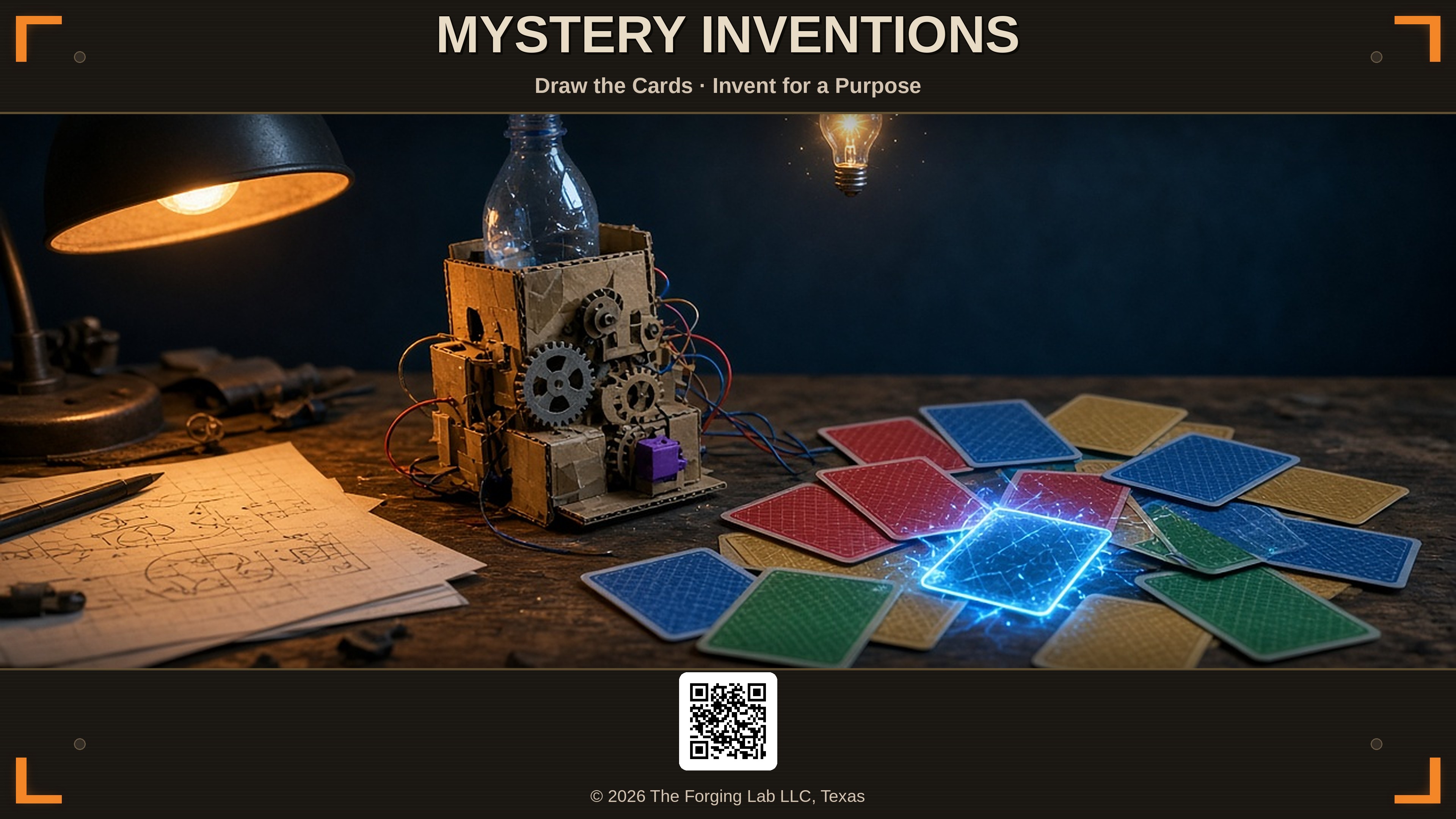
Mystery Invensions- FREE LESSON
Draw the cards. Invent for a purpose. Partner teams draw five mystery cards — who it's for, what it must do, two required features and one wild twist — and invent a product that fits all five. Then they show it their way: a prototype, a presentation or a 30–60 second edited video.
- • Teacher Challenge Brief
- • Student Pages; safety checklist
- •Grades 5–12 (with a higher-expectations track for 9–12)
- •5 class sessions, optional 6th
- •Color-coded printable deck of 91 cards + blanks, 2-page worksheet, one rubric for every format
- •FREE educator pack · © 2026 The Forging Lab LLC, Texas · www.theforginglab.com
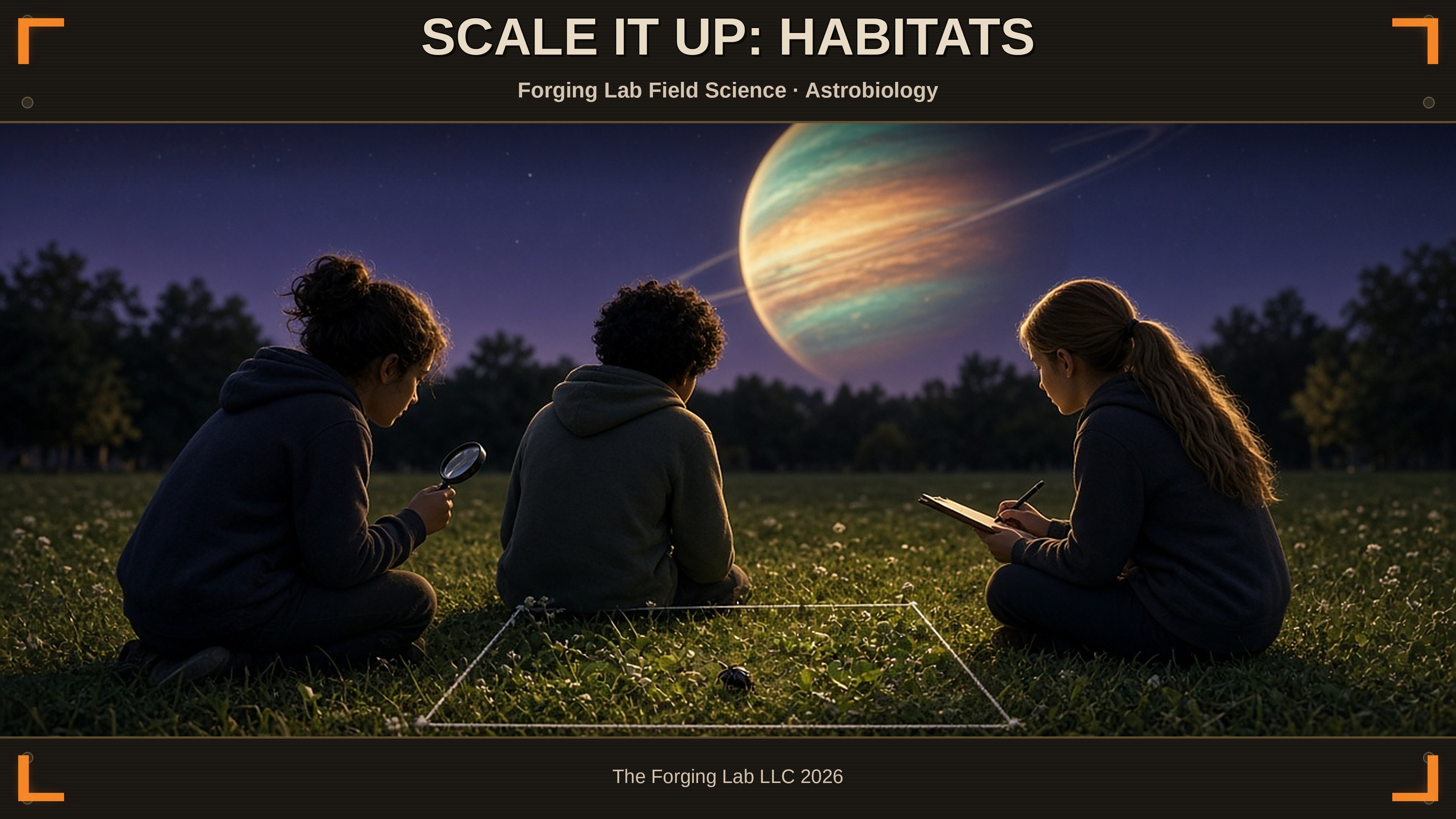
Scale it Up Habitats- FREE LESSON
How many living things share your schoolyard? In this FREE lesson for grades 6-8, field teams count every living thing in a 1 × 1 ft square, pool their data, and use averages, ratios and unit conversions to estimate the population of the whole schoolyard, a park and a forest. A "does this make sense?" check shows why the habitat mix matters. Indoors, 12 printable Habitat Sample Cards (8 Earth habitats and 4 fictional alien worlds) let students sample like NASA astrobiologists. Each card has a hidden twist, and a complete answer key is included. 2 class periods.
- • Teacher Challenge Brief
- • Student Pages; safety checklist
- •Original lesson by The Forging Lab LLC 2026. Not affiliated with or endorsed by NASA.
Coming Soon- FREE LESSON
Hands-on learning based in STEM.
- • Teacher Challenge Brief
- • Student Pages; safety checklist
Educational Consulting & Lab Design
Need guidance planning a school Makerspace or structuring cross-curricular STEM programs? We provide direct district and classroom consultation.